Healing Your Core After a C-Section: A DPT's Gentle Guide

Healing Your Core After a C-Section: A DPT's Gentle Guide
By Dr. Emily (DPT)
If you’ve had a C-section, you are a warrior. You have undergone major abdominal surgery to bring your baby into the world. And while you’re healing, you might be looking at your stomach and feeling completely lost.
Maybe you feel a sense of numbness around your scar. Maybe you're terrified to even touch your lower belly, let alone "exercise" it. You might see advice for healing Diastasis Recti and wonder, "But what about me? What about my incision?"
As a Doctor of Physical Therapy, I want to reassure you: Yes, you can heal your core. Yes, you can reconnect with those muscles. And no, you don't have to be afraid. You just need a gentler, more specific path.
What’s Different About C-Section Recovery?
During a C-section, your doctor makes an incision through multiple layers of tissue, including your skin, fascia, and uterus, and moves your abdominal muscles (your rectus abdominis) aside to safely deliver your baby.
Because of this, your recovery involves two key challenges:
Healing a deep incision (the scar tissue).
Re-activating muscles that have been disrupted and have "forgotten" how to fire.
This is why jumping into any traditional ab work (crunches, planks, sit-ups) is not just ineffective—it's dangerous. You're trying to build a house on an unstable foundation.
We have to build the foundation first.
Step 1: Start with Your Breath (Yes, Really)
Your first and most powerful tool for healing is your own breath. Your diaphragm (your breathing muscle) and your deep core/pelvic floor are designed to work together. We need to re-establish that connection.
This is the very first exercise I give my C-section patients, as soon as they feel comfortable.
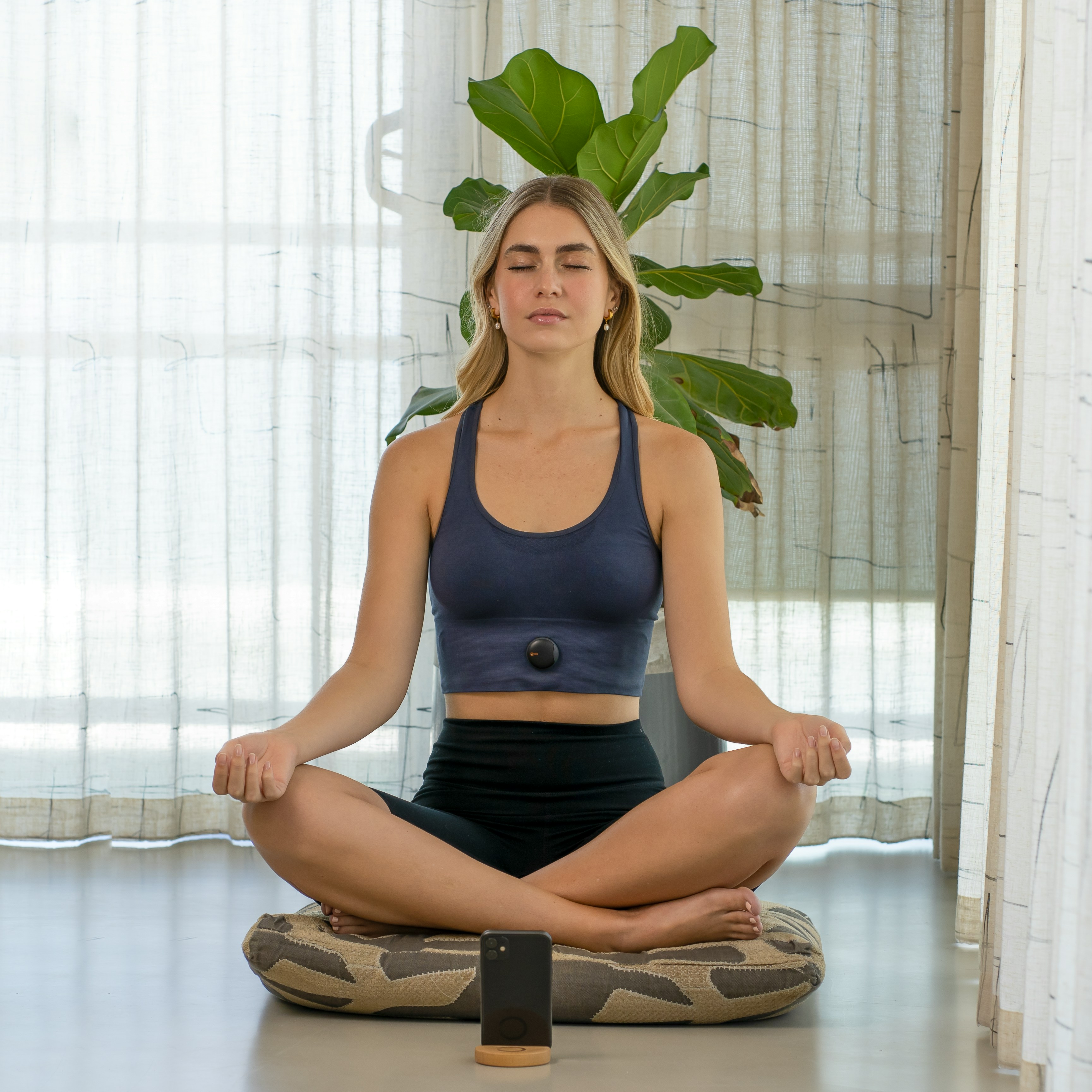
Sit comfortably or lie on your back.
Place your hands on your lower ribs.
Take a slow, deep breath in, imagining your ribs expanding 360 degrees (front, sides, and back). Let your belly and pelvic floor relax and "drop."
Now, exhale slowly, as if you're gently blowing out a candle. As you exhale, imagine you are gently zipping up a pair of pants—visualize the muscles from your pubic bone up to your belly button gently drawing in and up.
Do this for 1-2 minutes. This "Core Connection Breath" is not a "workout." It's an activation. It is the safest, gentlest way to remind your deep core muscles that they still exist.
Step 2: The Truth About Your Scar
For many women, the scar itself is a source of fear. It might feel numb, tingly, or sensitive. You might have a "shelf" or "pouch" of skin that hangs over it.
This is often due to scar tissue, which can bind to the layers of fascia and muscle underneath. This can restrict movement and even contribute to that "pooch" feeling.
Once you are cleared by your doctor (usually around 6-8 weeks postpartum), one of the most beneficial things you can do is gentle scar mobilization. This is a gentle massage technique to help free up those tissue layers, restore sensation, and improve the scar's appearance.
Starting with just a gentle, circular massage around the scar with lotion can help. (But never do this on an unhealed or open incision. Always wait for your doctor's clearance.)
Your Path to Feeling Strong Again
Healing from a C-section is a journey of layers. It starts with breath. It moves to gentle activation. It includes scar care. And then, it progresses to safely loading the core and rebuilding your strength, step-by-step.
You did not "miss your chance" to recover. You are not "broken." Your body just needs a roadmap that was designed specifically for your journey.
This gentle, layered approach is the entire foundation of The Core Restore Program. It was built to be safe and effective for all mothers, with specific modifications for C-section recovery. We don't skip to the "hard" stuff; we start by rebuilding your foundation from the ground up, just like I would in my 1-on-1 clinic.
You can and you will feel strong and connected to your body again.
With support, Dr. Emily